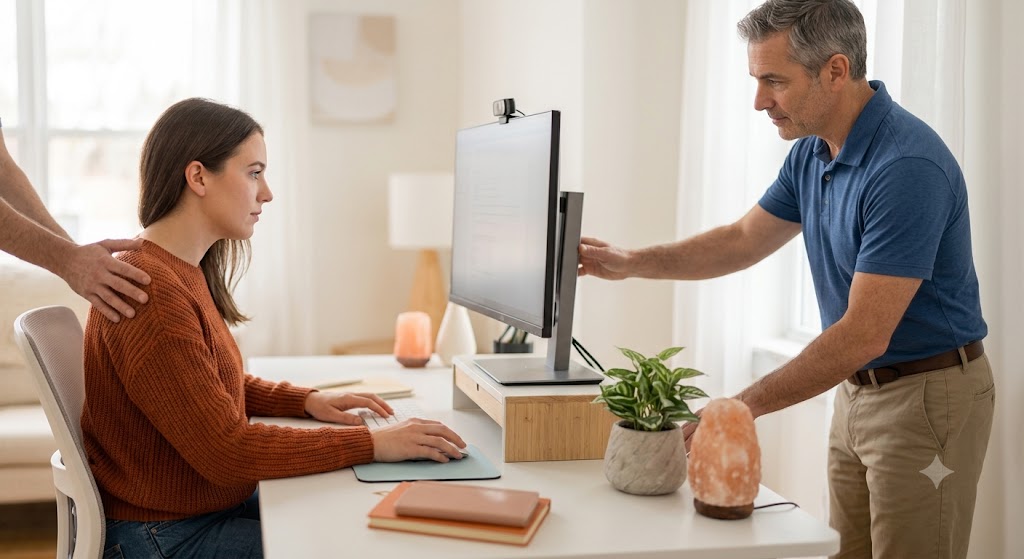
Many people notice neck stiffness, shoulder tightness, or lower back discomfort after spending long hours sitting at a desk. In most cases, the issue is not one single movement but a combination of prolonged posture, repetitive tasks, and limited breaks during the day.
Small ergonomic adjustments can make a meaningful difference, especially when they are paired with simple mobility exercises and regular movement.
Why Desk Posture Matters
When the head stays forward for long periods, the muscles in the neck and upper back have to work harder to support it. That tension can build up over time and contribute to headaches, tight shoulders, and pain that seems to get worse as the day goes on.
Common signs of desk-related strain
- Neck stiffness or soreness
- Upper back tightness
- Lower back discomfort after sitting
- Headaches that worsen later in the day
- Reduced range of motion when turning your head or reaching
Simple Changes That Can Help
Improving posture does not require a complete office overhaul. A few habits often help more than people expect:
- Keep your screen at eye level to reduce forward head posture
- Support your lower back with a chair that encourages neutral alignment
- Keep feet flat on the floor and avoid crossing your legs for long periods
- Take movement breaks every 30 to 45 minutes
- Use gentle stretches or mobility work to reset your neck, shoulders, and hips


When to Seek Help
If discomfort is recurring, getting worse, or affecting sleep, work, or daily movement, it may be worth getting assessed. Physiotherapy can help identify the underlying cause and build a treatment plan that addresses both symptoms and movement patterns.
"Small posture changes, combined with regular movement, can reduce strain before it becomes a larger problem."
How Physiotherapy Can Help
At Wellness Planet Rehab, we assess posture, mobility, muscle tension, and daily movement habits to create a realistic plan for recovery. Treatment may include manual therapy, exercise, posture retraining, and advice on how to reduce strain at work and at home.
Start Feeling Better
If desk posture is affecting your comfort and mobility, our team can help you build a plan that fits your routine and supports long-term relief.